
Freedom, Responsibility and a Weekend to Remember in Prague
In this article:
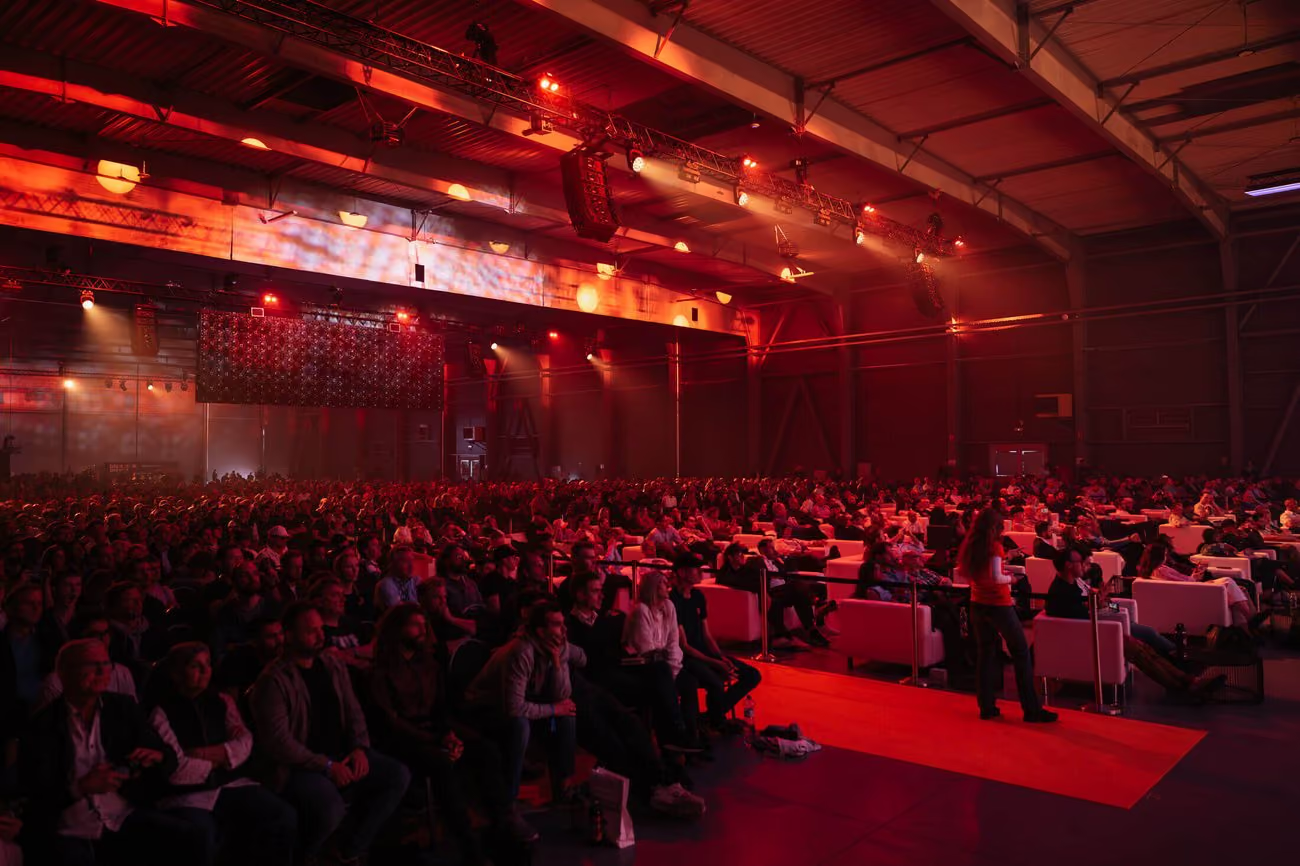
For three days, 10,000 Bitcoiners took over a 19,000-square-meter exhibition center on the edge of Prague and turned it into something between a conference, a festival and a temporary sovereign republic.
There were four stages, more than 250 speakers and over 100 Bitcoin companies competing for attention across an expo floor filled with hardware wallets, miners, nodes, security tools, flashing screens and enough orange lighting to make the sun feel underdressed. Around the corners people were arguing about CBDCs, mass surveillance, quantum threats, raising kids in this system, living healthy, and trading stories like battle scars. One person pushing back on surveillance tech, another defending their stance on quantum preparedness, someone else explaining how they’re actually raising sovereign kids in this mess.
So, yes, it was a fairly normal week in Prague. The timing made the atmosphere even harder to ignore. Bitcoin’s price had been falling, the headlines had rediscovered their favorite crash vocabulary, and the market had entered the part of the cycle where tourists remember they have other hobbies. Inside BTC Prague, however, nobody appeared particularly interested in holding a funeral.
The halls were packed, meetings spilled into the walkways, and every journey across the venue became a sequence of unexpected conversations with builders, educators, privacy advocates, security experts and Bitcoiners who had travelled across continents to be around people who finally understood why any of this mattered.

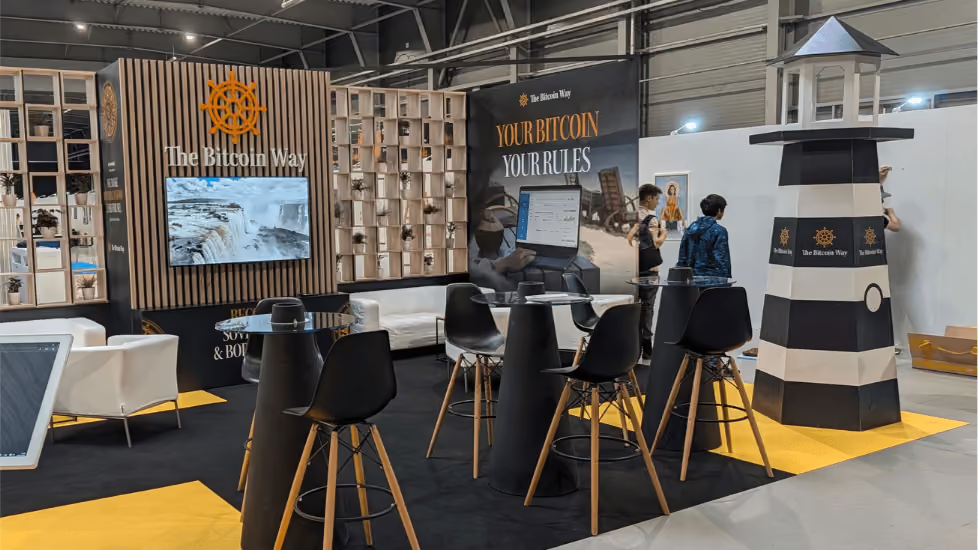
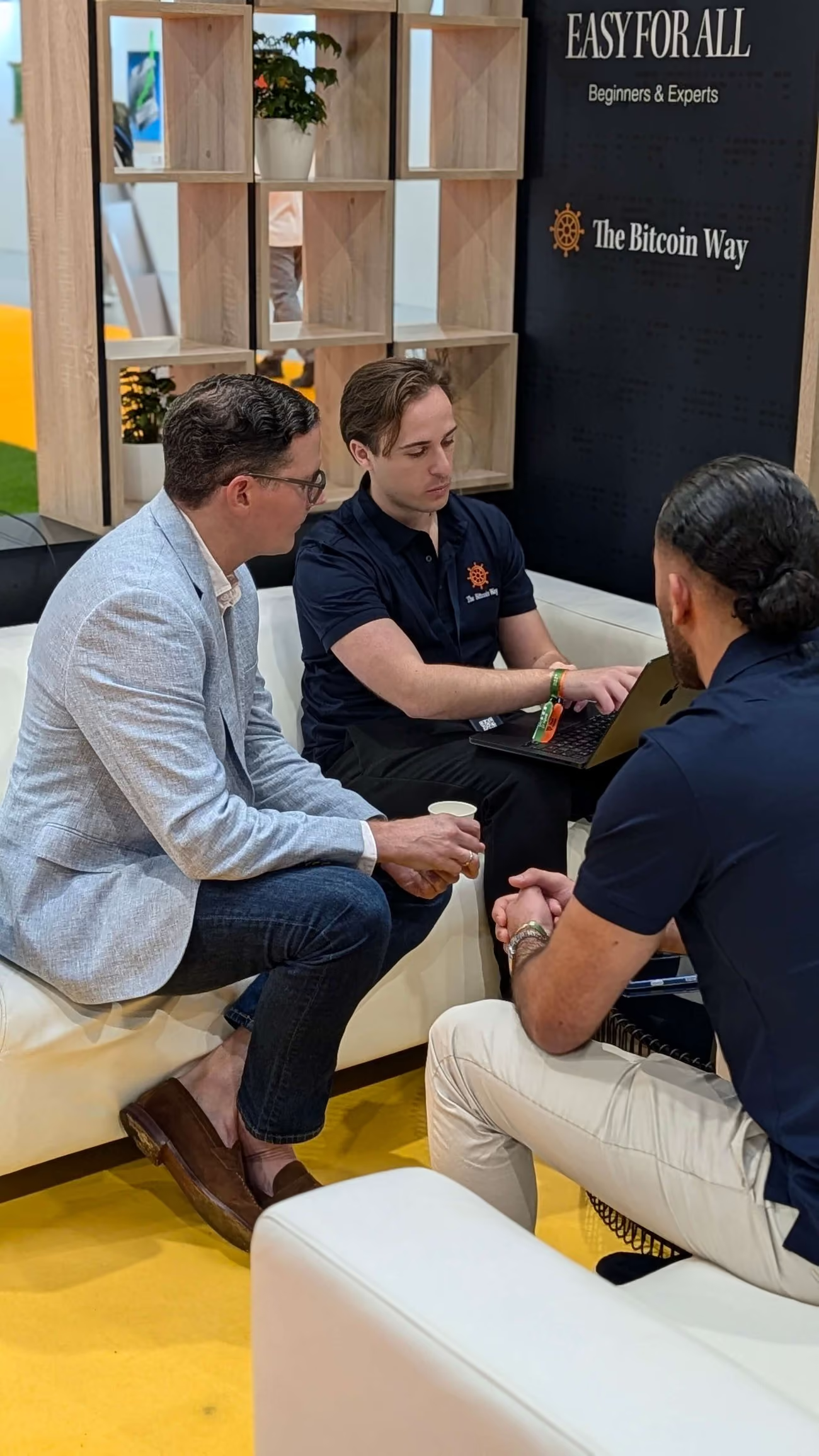
At the center of that organized chaos stood The Bitcoin Way’s largest presence yet. Our stand became a constant meeting point for people asking how to secure their Bitcoin properly, protect their privacy, strengthen their digital lives and create geographical options before they desperately needed them. Some arrived with technical questions. Others wanted to understand how sovereignty survives marriage, children, taxes, borders and the inconvenient habit governments have of changing the rules.
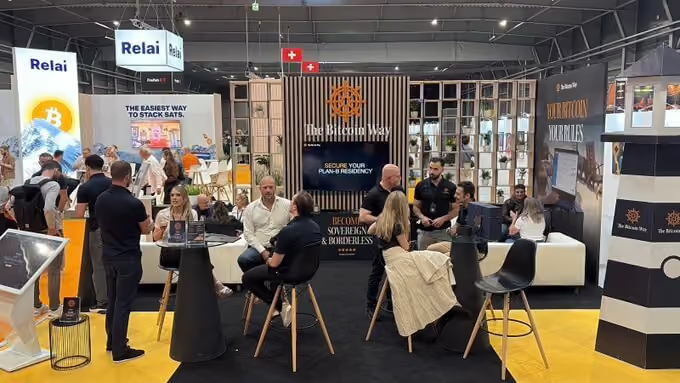
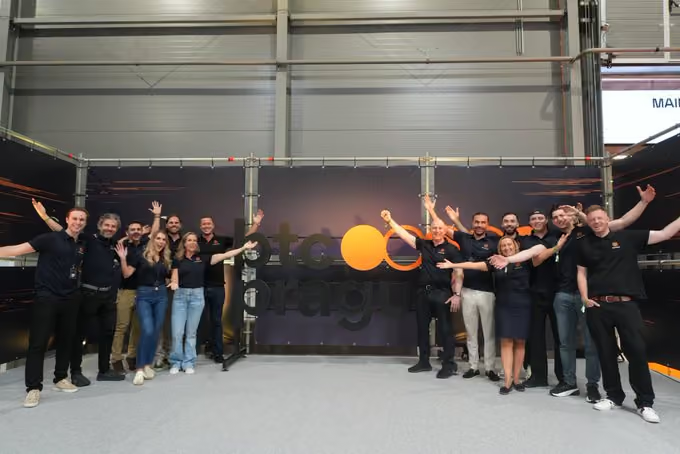
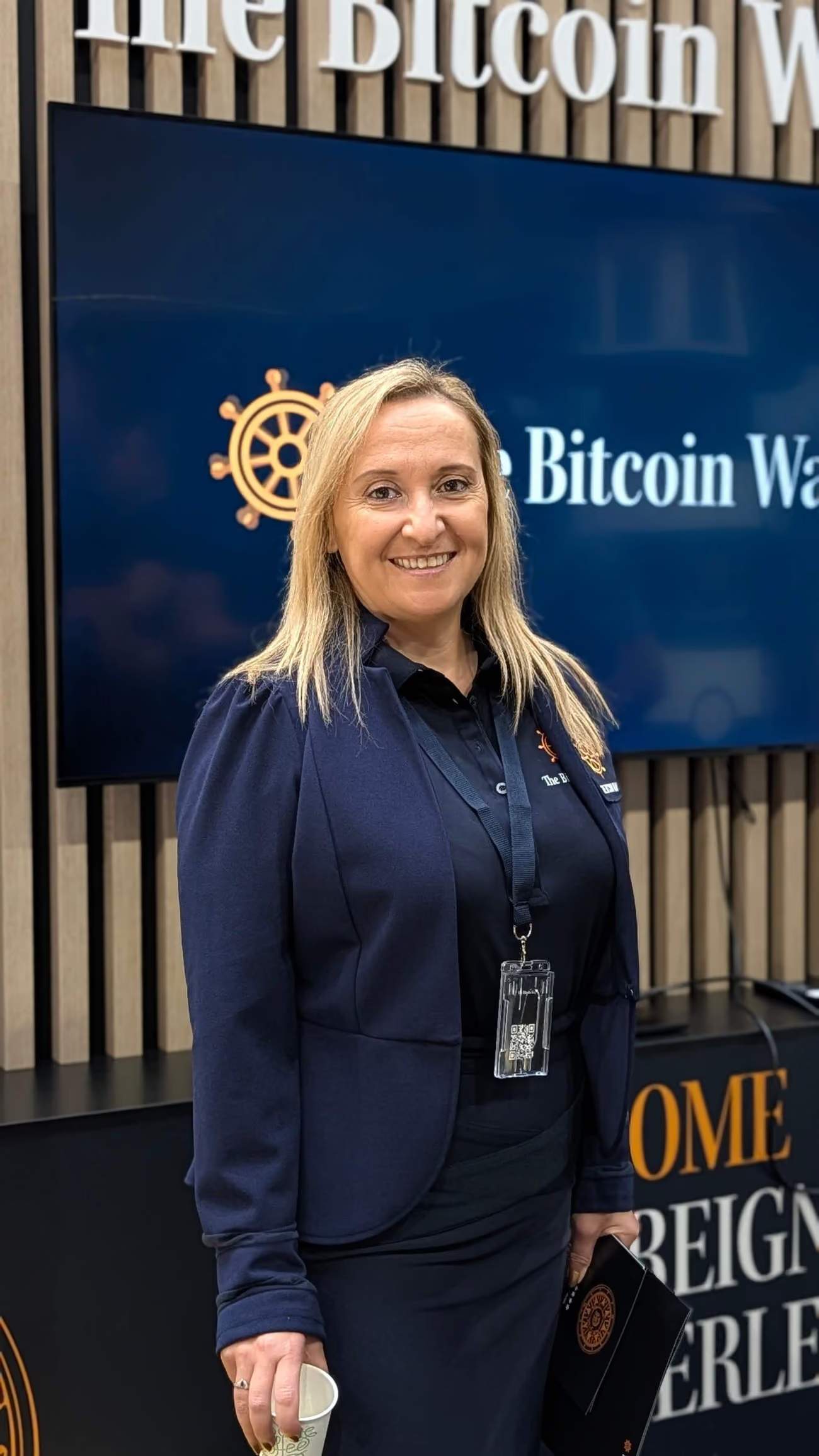
Behind the stand was a team of 17 people teaching, filming, organizing, solving problems and occasionally attempting to locate food. The scale would have been impressive anywhere, but Prague made it personal. Three years earlier, we had launched at this same conference with Tony, Endi and Ahmed.
This time, we came back with an entire community.
The People Behind the Mission
A team photo can show you how many people were there. It cannot show you what they were doing, how many conversations they were juggling, or how much energy it took to keep everything moving across three relentless days.
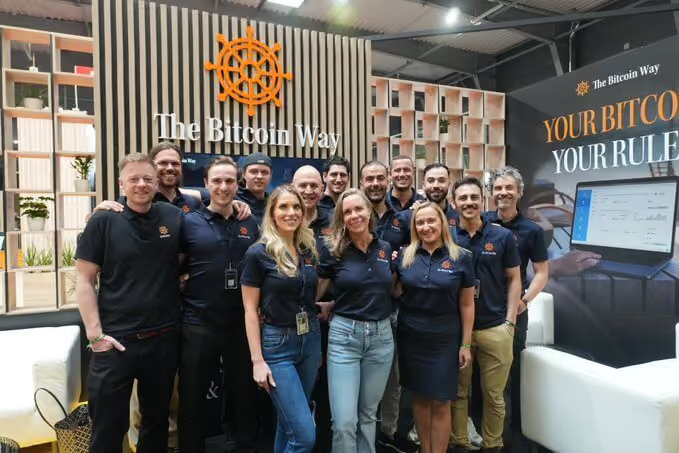
Anna, Bert and Mo spent the entire three days walking hundreds of people through real self-custody questions and freedom tech. Some were finally taking their first serious steps off exchanges. Others showed up with setups they thought were solid, only to leave with that quiet, uncomfortable feeling that one weak link was still sitting somewhere in the dark. By Saturday, Mo had talked to so many people his voice had basically walked off the job.
Lucas, our head of engineering, AI expert and in-house Tony Stark, ran the Diamond Hands competition, presented the prizes and naturally found time for a little flexing along the way. Katie, Armin and Gab moved through the conference capturing the talks, conversations and moments that we will be sharing across our social channels over the coming weeks.
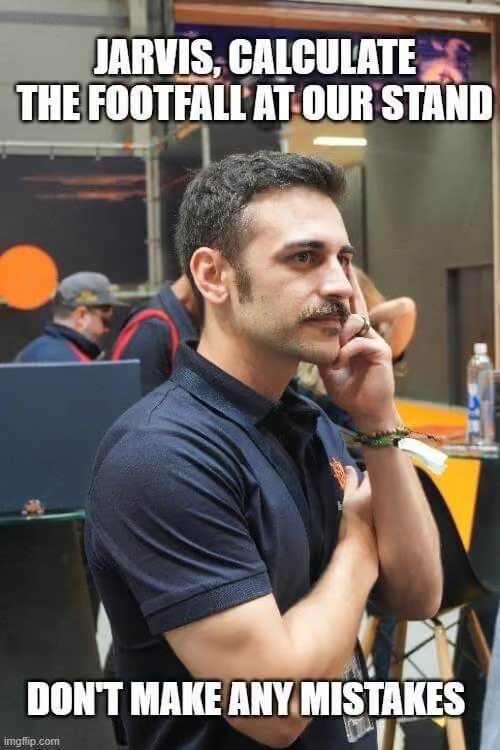
Amra spoke with people considering a geographical Plan B and wondering what life in Panama looks like beyond residency forms and glossy brochures. She lives there, understands the process, knows the people and can explain the difference between having another residency on paper and building an option your family could genuinely use.
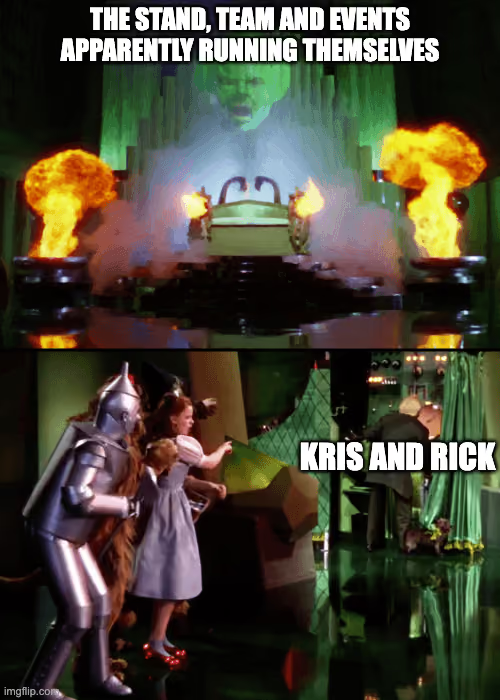
Meanwhile, Rick and Kris were the men with the clipboards, moving around the venue and making sure the stand, team and events continued to function as though everything had happened effortlessly. This is one of the great illusions of a successful conference: the audience sees the finished experience, while somewhere behind it two people are solving seven problems nobody else has noticed yet.
Because we normally work remotely, Prague gave the whole team something video calls can’t replicate. We ate together, discussed, laughed, strengthened actual friendships and spent enough time in the same room to remember that the people on the other side of the screen are real humans. Complete with bad jokes and lost voices.
That matters because nobody comes to us simply to purchase a product and disappear. They come with questions about their money, security, family and future, and those questions require trust in the people helping them answer them. At BTC Prague, those people were no longer behind a video call. They were everywhere.
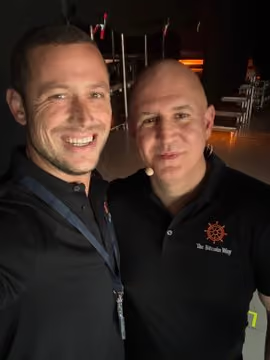
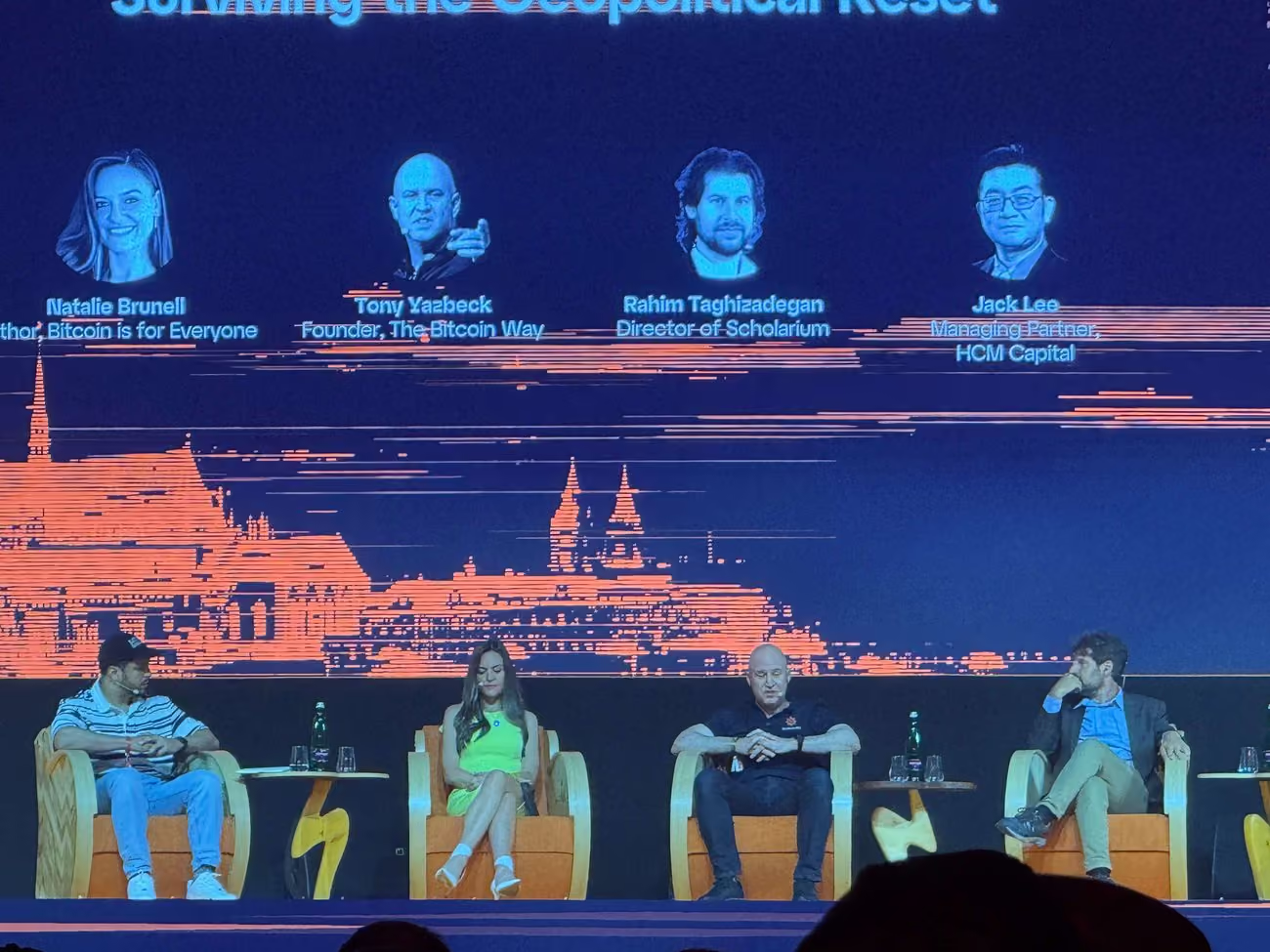
And then Michael and Tony carried the same mission onto the main stage.
The Yield on Bitcoin Is Freedom
Michael didn’t take the main stage to talk price targets, portfolio allocations or the latest institutional tourist showing up fifteen years late expecting a pat on the back.
His point was simpler and sharper: the fiat system is a sophisticated form of slavery. It keeps people dependent, extracts the real value of their work, rewards the parasites closest to the printer, and forces everyone else to run faster just to stay in the same place. That is why Bitcoin’s real yield is not a dividend, cash flow or a larger number on a fiat-denominated balance sheet. As Michael put it, the yield on Bitcoin is freedom.
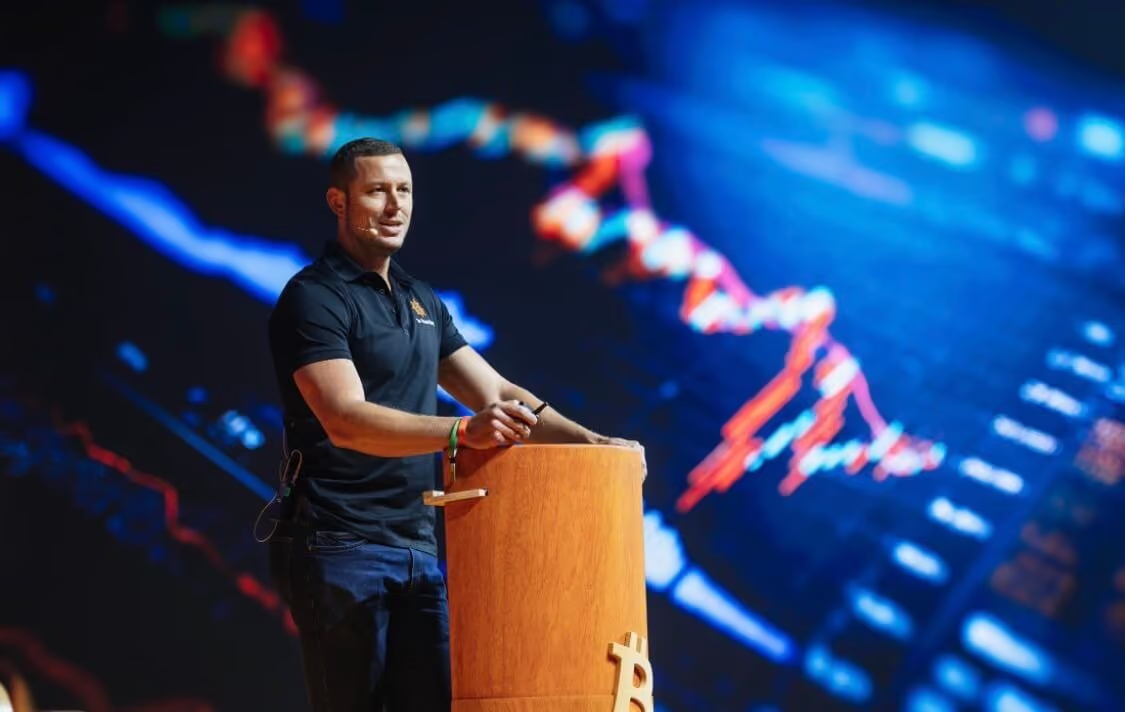
Too many people still stare at the chart waiting for Bitcoin to make them rich. The deeper return is independence. Once you actually understand what Bitcoin is, you start asking the dangerous question: why the hell should anyone else control your money? That question leads straight to self-custody and real financial sovereignty. But the rabbit hole doesn’t end with a hardware wallet.
Once you recognise the extraction built into fiat money, you begin noticing it elsewhere. Your data, communications, movements and digital habits are collected, packaged and monetised. You may control your Bitcoin while the rest of your digital life remains somebody else’s product. Financial sovereignty therefore leads towards digital sovereignty.
Then the questions become geographical. Can you protect yourself from insane taxes? Do you have the tools and legal options to protect your family? Can you live the life you choose, or does that freedom still depend on one government remaining reasonable? Once you start asking those questions, you realize that self-custody and digital privacy may not be enough. You need a Plan B. That doesn’t mean fleeing tomorrow or disappearing into the jungle with a hardware wallet. It means building real options before circumstances force you to need them.
Michael’s message was that Bitcoin changes far more than your balance sheet. It changes how you think, how you see the world and how you organise your life. Its greatest power is not that it can make you rich, but that it can make you harder to control. Ignore the suits, the talking heads, the hype and the charts. Bitcoin is not simply better money. It is the ability to opt out.
Freedom Without Responsibility Is Just Another Dependency
If Michael’s keynote asked what Bitcoin gives us, Tony’s asked the more uncomfortable question: what kind of person do you have to become once nobody is standing between you and the consequences?
He started with his father, a man who lost everything three times. The money vanished each time, but the things that actually mattered survived: sharp judgment, iron discipline, raw resilience, and the willingness to stand up and take full responsibility when everything went to hell.

That was the inheritance. Not a balance sheet, not an easy life, not a guarantee that the next crisis would be kinder than the last one. His father passed down the internal tools required to survive when the external ones failed. Resilience, in that sense, was inherited long before wealth. Money can be confiscated, debased into nothing, or wiped out by the next political clown show. Assets disappear. Institutions fail. But the values one generation drills into the next can survive anything.
That idea shaped the rest of the keynote. Bitcoin is often discussed as an investment, a hedge or a path towards greater wealth, but Tony argued that its real significance lies in ownership and sovereignty. It aligns money more closely with reality because it removes the comforting fiction that somebody else will always protect us from the consequences of bad decisions. Bitcoin gives individuals extraordinary freedom, but it also removes excuses.
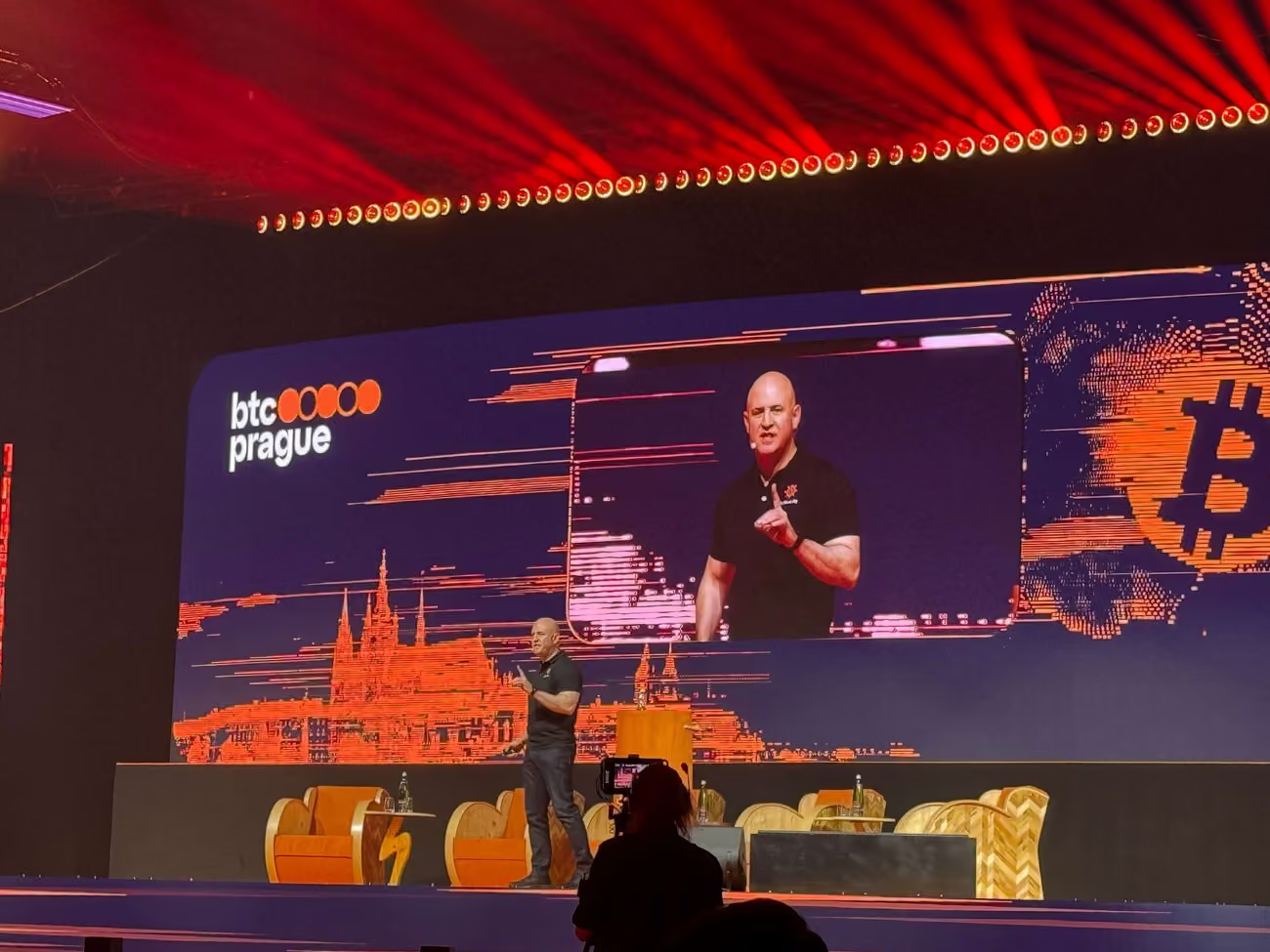
That is exactly why the room lost it when Tony said money no longer needs the state and no longer has to obey it. The line hit so hard he had to pause, repeat it, and the crowd went even louder the second time. The applause made sense. Everyone wants the freedom part, but the harder part is what follows.
Bitcoin doesn’t magically fix human problems. It doesn’t make you wise, organized, secure, private or prepared. It simply gives you the chance to stop outsourcing responsibility. It doesn’t do the work for you. Self-custody is not a badge. Sovereignty is not something you unlock by buying a hardware wallet, hiding your seed phrase in some dusty drawers, and calling yourself spiritually unbanked. It demands competence.
You have to know what you own, how it is secured, who can access it, what happens if you disappear, what your family actually understands, and where your hidden dependencies are still waiting to bite you. That is why the conversations after the speech mattered. Tony’s full BTC Prague keynote, “After the Collapse: The Mirror of Bitcoin”, is now available to watch. It is worth seeing the argument unfold in his own words, from the lessons inherited from his father to the moment the room erupted when he declared that money no longer needs to obey the state, watch the full speech here.
People came up to Tony with tears in their eyes. Many barely mentioned Bitcoin. They talked about their fathers, their children, and the people who taught them what real hardship and responsibility look like. The message had gone straight through money and hit something deeper: what actually survives a crisis, what one generation passes to the next, and what responsibility feels like when the safety nets are gone.
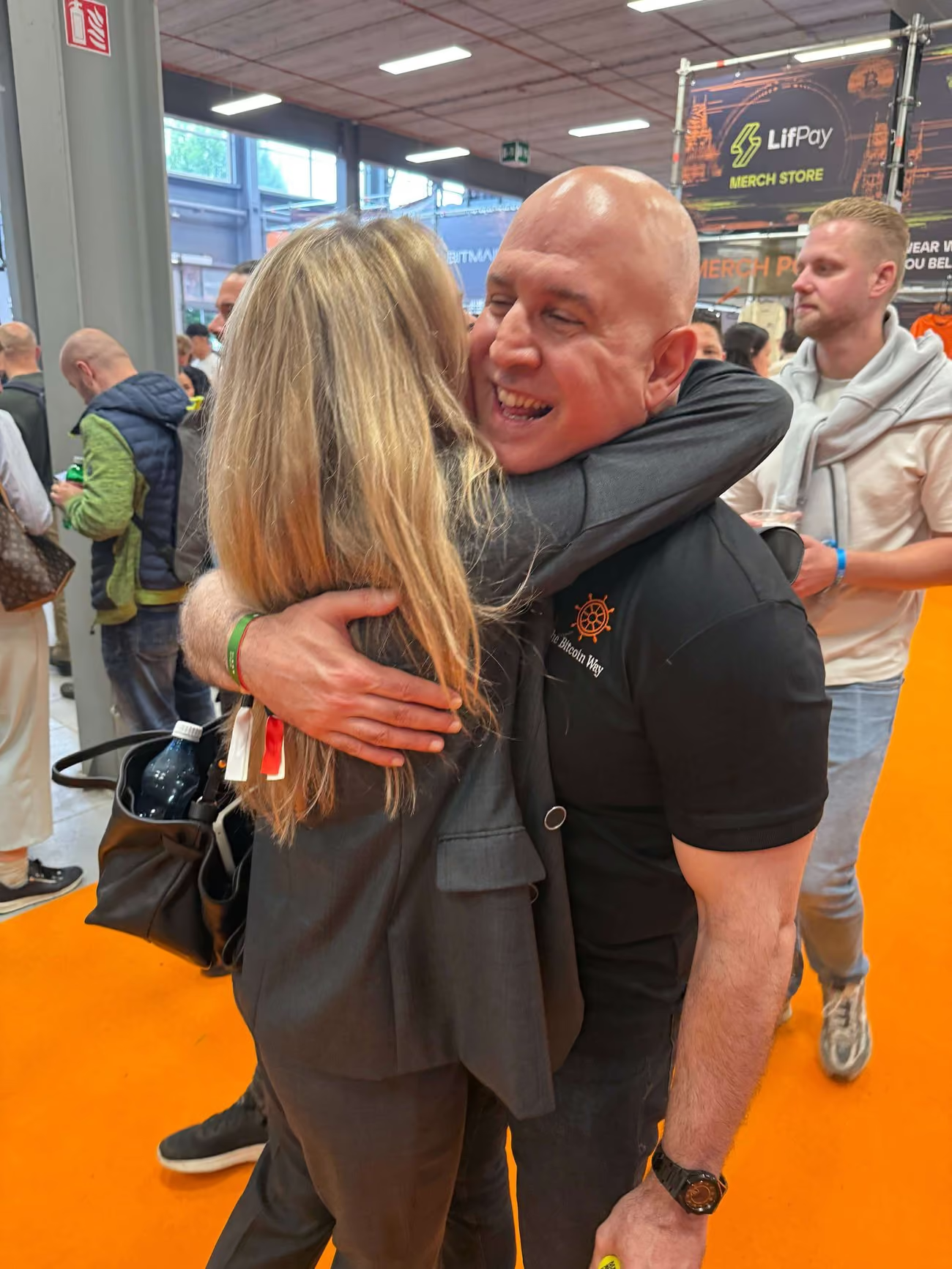
The same thread ran through Tony’s panels on CBDCs, surveillance and systemic risk. The threat is not only one bad technology, one hostile policy or one financial crisis. It is the gradual normalization of dependence, where people stop exercising responsibility because someone else is supposedly taking care of everything.
That is how free people become managed people. Not all at once. Not always by force. Often through convenience, fear, complexity and the quiet relief of letting someone else hold the keys. Bitcoin offers a way out of that pattern, but it doesn’t let us remain passive. It gives us freedom, then asks whether we are competent enough to carry it.
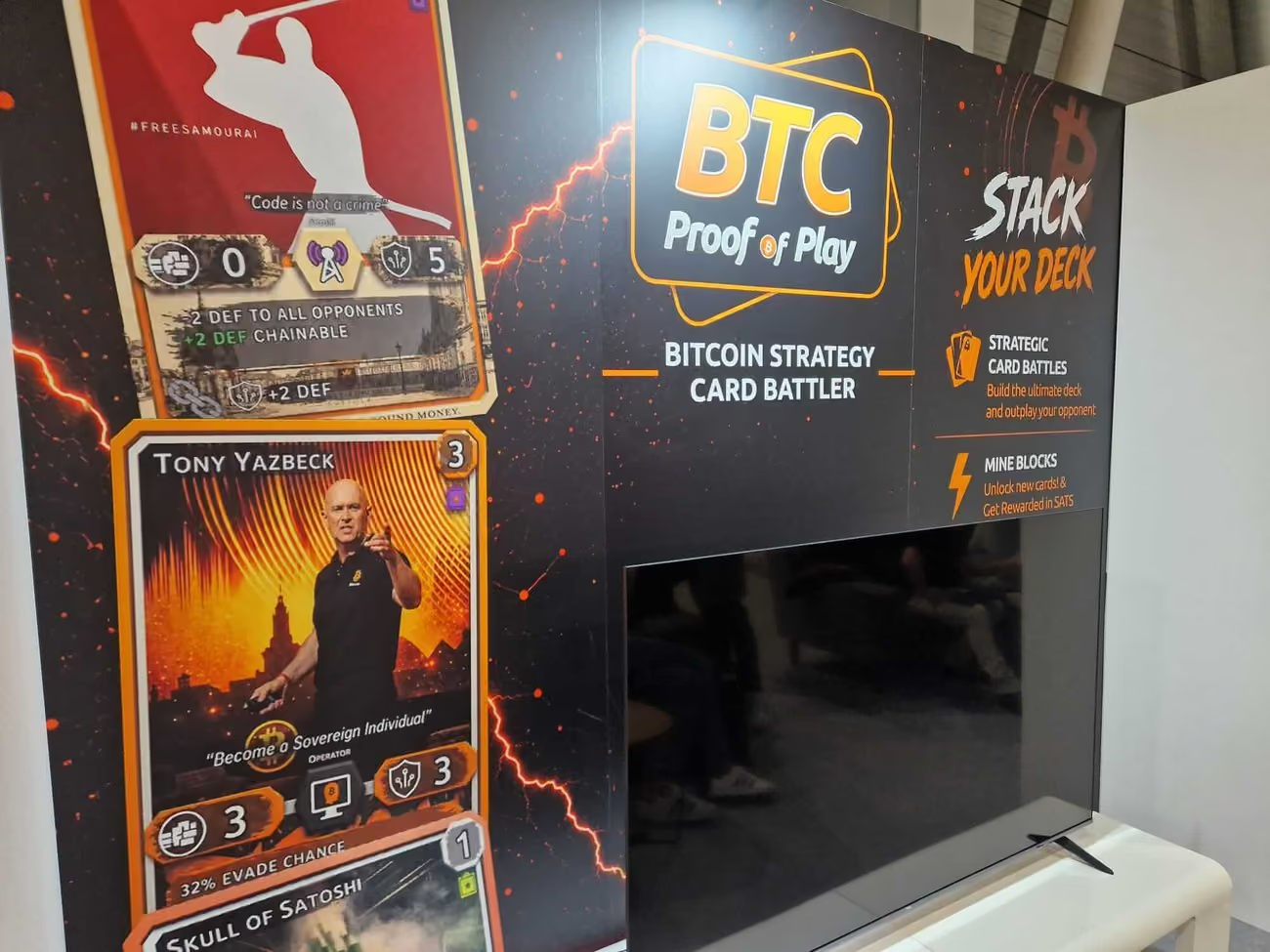
There was also a slightly surreal Prague moment when we discovered that Tony had somehow made his way into a Bitcoin card game: BTC Proof of Play. After taking the main stage to explain why money no longer needs to obey the state, he was apparently ready to continue the fight in pixel form too.
Diamond Hands, Literally
BTC Prague had no shortage of people claiming to have diamond hands, so we decided to test the claim with something slightly more objective than a tweet.
At the stand, visitors stepped up to a digital grip-strength trainer and squeezed for glory, bragging rights and a prize package worth taking seriously: full training from The Bitcoin Way, a Start9 node, a Coldcard Q and a MicroSeed stamping kit. Lucas kept the challenge moving, and the competitive tension suitably high, while Michael reinforced his emerging gigachad credentials by posting a score of 86.9.
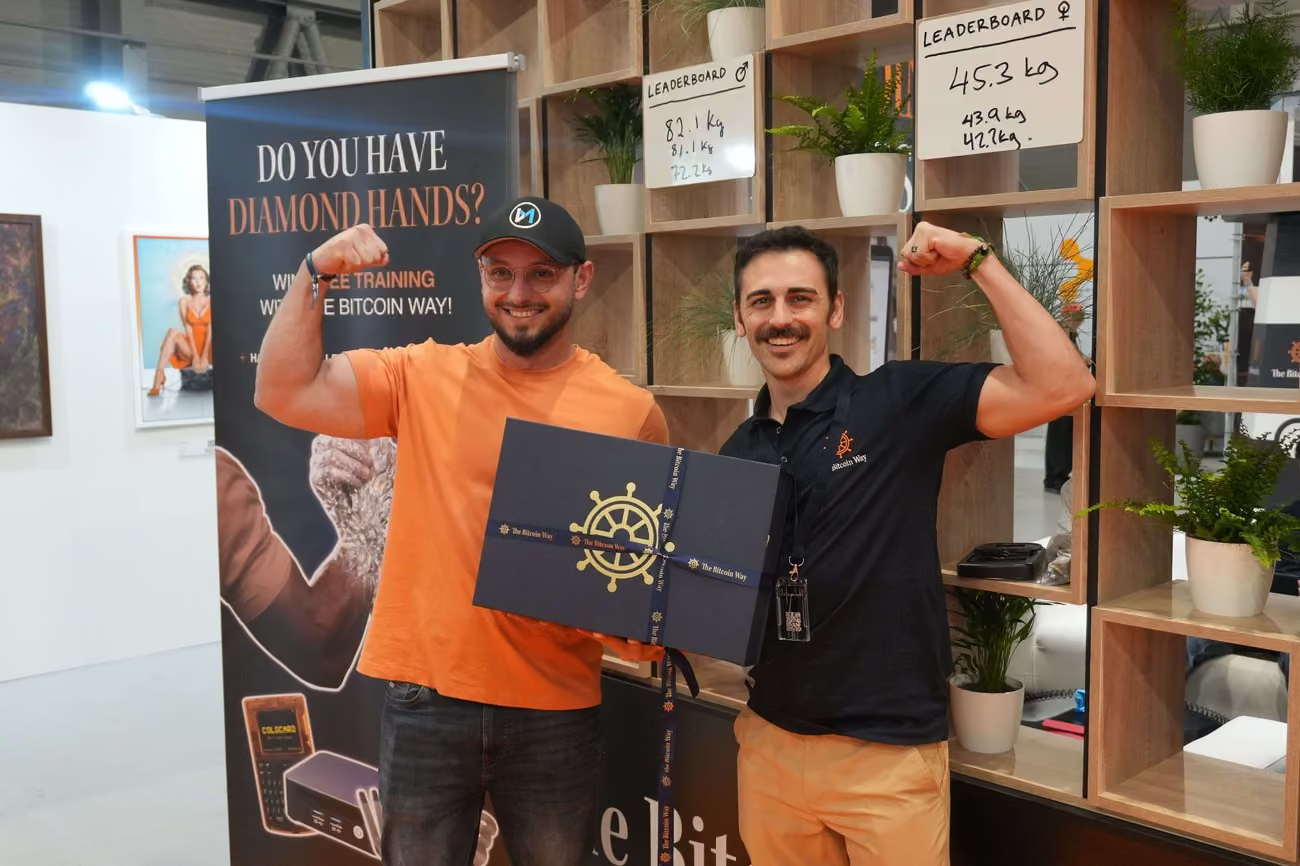
Separate competitions for men and women drew a steady crowd, while several forearms began questioning their life choices. What started as a bit of fun quickly became one of the busiest parts of the stand. People arrived to test their grip, then stayed to ask about nodes, hardware wallets, backups, privacy and how to avoid the mistakes that can turn self-custody into a very expensive lesson.
That was the deeper point. Diamond hands might help you sit through a bear market, but they are less useful when your setup is fragile. Holding Bitcoin takes conviction. Keeping it takes competence.
The competition eventually gave way to one of the weekend’s more carefully planned moments: Satoshi’s Dinner.
Not Your Keys, Not Your Dinner
For Satoshi’s Dinner we invited 24 people whose real work in education, adoption, open-source development and hardware actually deserves respect. Then we made entry a little harder than your average reservation.
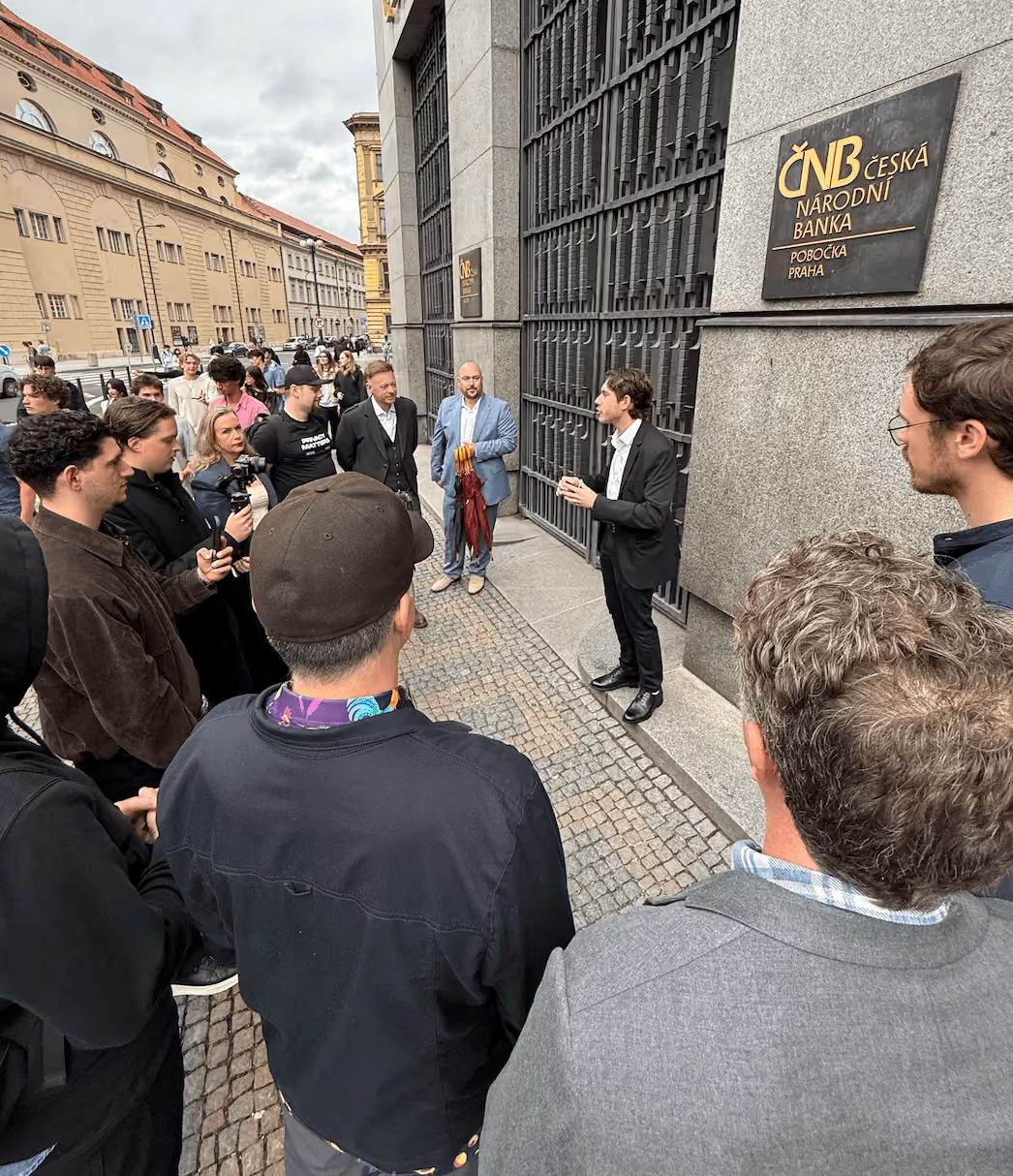
Each guest received a secret key under the rule: not your keys, not your dinner. Lose it, and KFC was waiting. The meeting point was only revealed that morning: the Czech National Bank, where a magician welcomed everyone by making money appear from thin air, in what may have been the most accurate central-banking demonstration of the week. Basically, watching a professional artist do in public what central bankers do to your savings every single day.
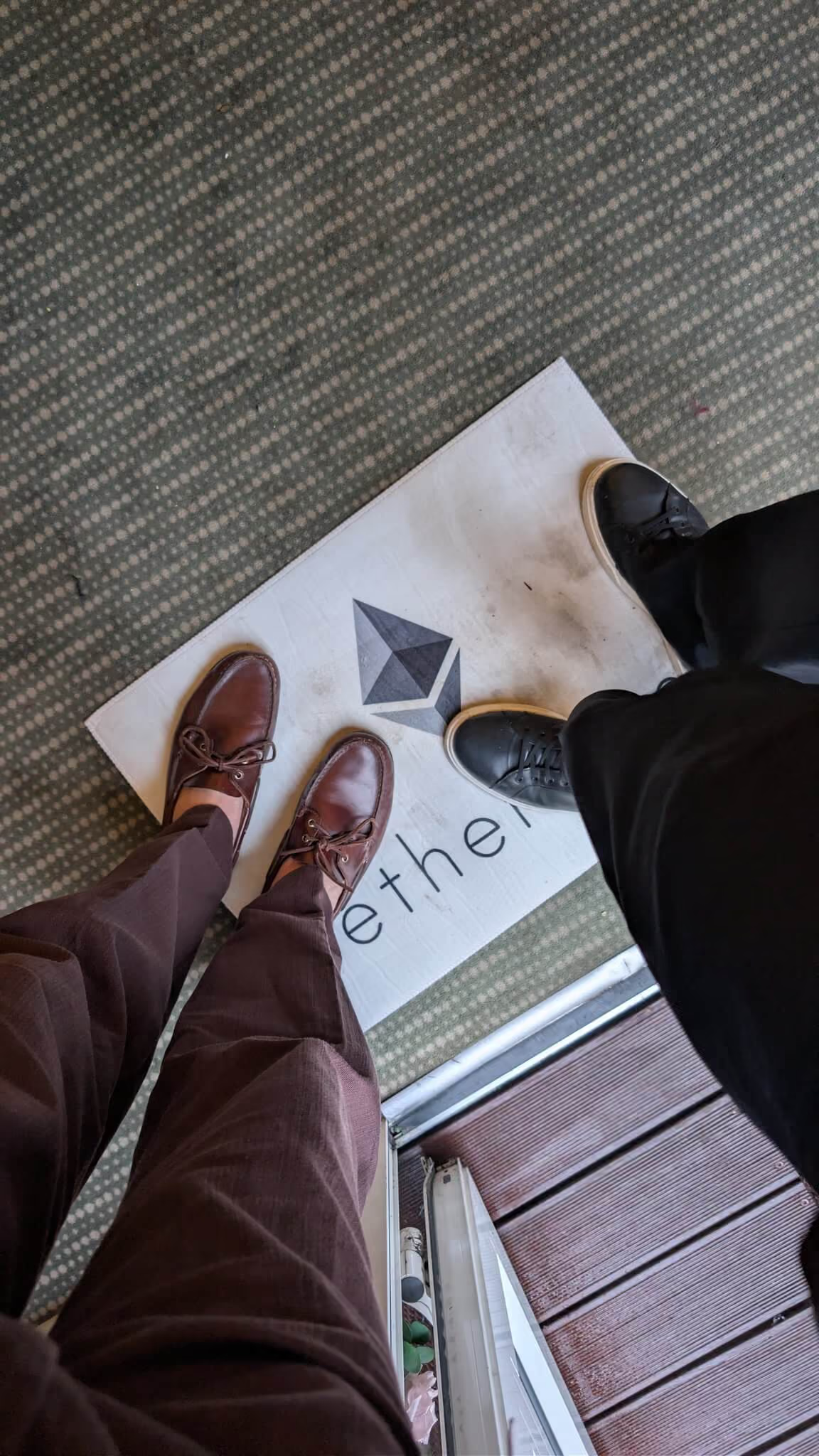
From there, the group walked to the Grand Mark Hotel, stopping first to wipe their feet on an ETH doormat. The keys then revealed their second purpose. Each contained one word from a seed phrase, and the guests were split into two teams captained by Endi and Ahmed, former school rivals who somehow ended up becoming founders and close partners. Neither of them knew what was coming. Their task was to assemble the words, restore a Lightning wallet and sweep the sats before the other team.
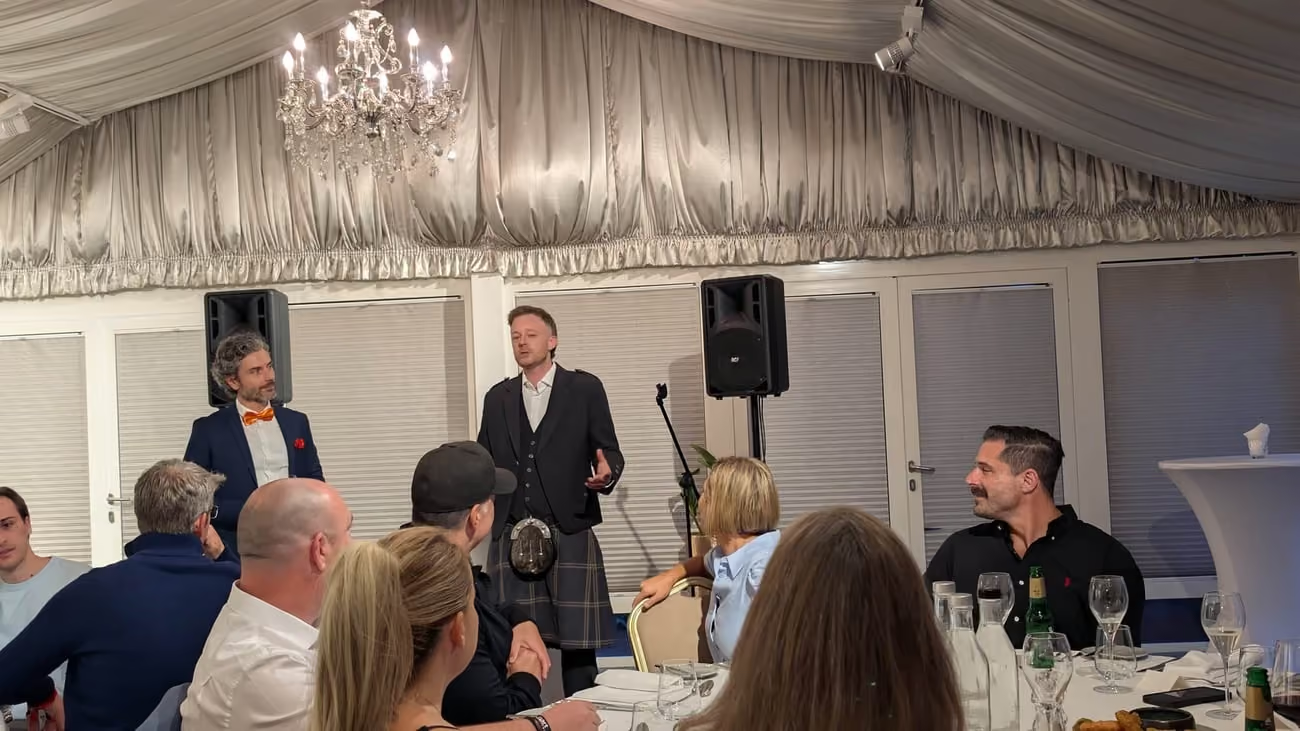
Once the Benny Hill theme started playing, dignity left the room. Endi’s team won, the old rivalry was restored, and the losing side received XRP T-shirts as a consolation prize, which was generous by shitcoin standards.
Beneath the theatre, the evening had a serious purpose. It brought together builders, educators and friends who are helping more people understand Bitcoin, take custody and become harder to control. Bitcoin may be trustless, but the movement around it is still built through trust, friendship and the occasional public humiliation of a shitcoiner.
You Are Not Just Buying a Service
For a remote team, Prague gave us something that no video call can reproduce.
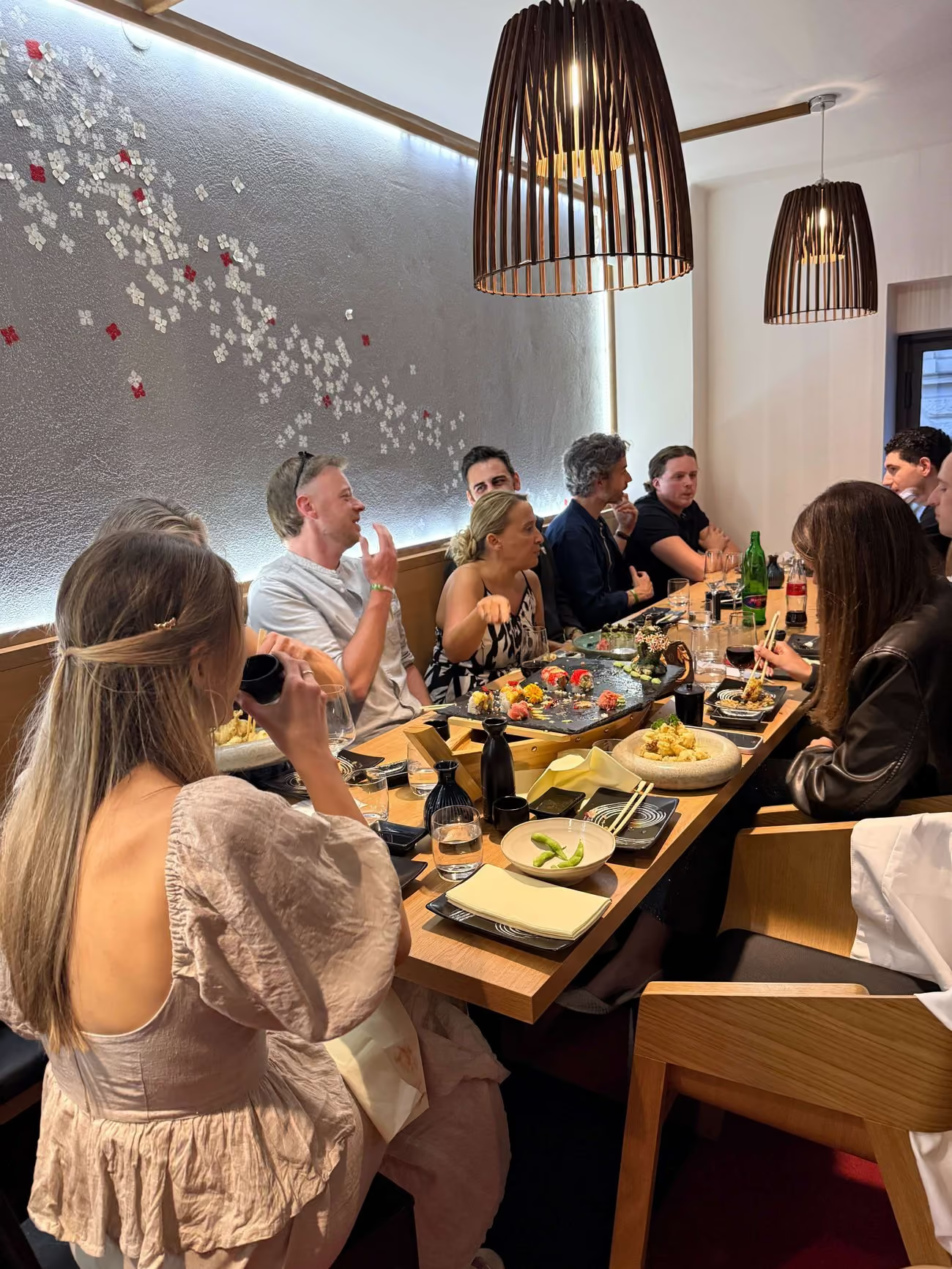
We shared meals, continued conversations long after the conference doors closed, exchanged ideas and spent time together as friends rather than small rectangles on a screen. Those moments matter because The Bitcoin Way is not built by a collection of anonymous experts delivering isolated services. It is built by people who know one another, trust one another and share a genuine commitment to helping others become more capable and sovereign.
That human connection also shapes how we work with clients.Someone speaking with Amra about a Plan B in Panama is not receiving a generic residency presentation from somebody who has read the right brochure. Amra lives there. She knows the process, the people, the places and the practical difference between obtaining a residency document and creating an option your family could genuinely rely on.
The same principle runs through everything we do. Self-custody is personal because the right setup depends on your life, your family and the risks you actually face. Cybersecurity is personal because your vulnerabilities don’t arrive in a standard package. Inheritance is personal because protecting Bitcoin means little if the people you love cannot access it when they need to. That is why the relationship cannot end when a call finishes or a piece of hardware has been configured.
The 17 people gathered in Prague showed what has grown from three founders arriving at the same conference with an idea. Clients are not entering a transaction with a faceless company. They are joining a community of people committed to helping them protect what they have built, strengthen the areas where they remain exposed and become more confident in carrying responsibility for their own future.
For everyone who could not join us in Prague, the conference may be over, but the questions remain. Are your keys secure? Is your digital life properly protected? Do you have geographical options if the rules change? If you need help answering any of those questions, book a free 30-minute introductory call with one of our advisors.
The yield on Bitcoin may be freedom, but nobody becomes sovereign alone.