
There’s Bitcoin, And Then There’s Everything Else

In this article:
Earlier this month, roughly $285 million vanished from something called Drift.
Most people have never heard of it, and honestly, why would they? Drift is just another platform in the wider crypto circus. Just another Bitcoin affinity scam proudly marketing itself as a “decentralised” alternative to traditional finance to prey on the uninformed and the gullible.
These projects always make extraordinary claims, but dig beneath the surface even slightly and you quickly discover they are decentralised in name only.
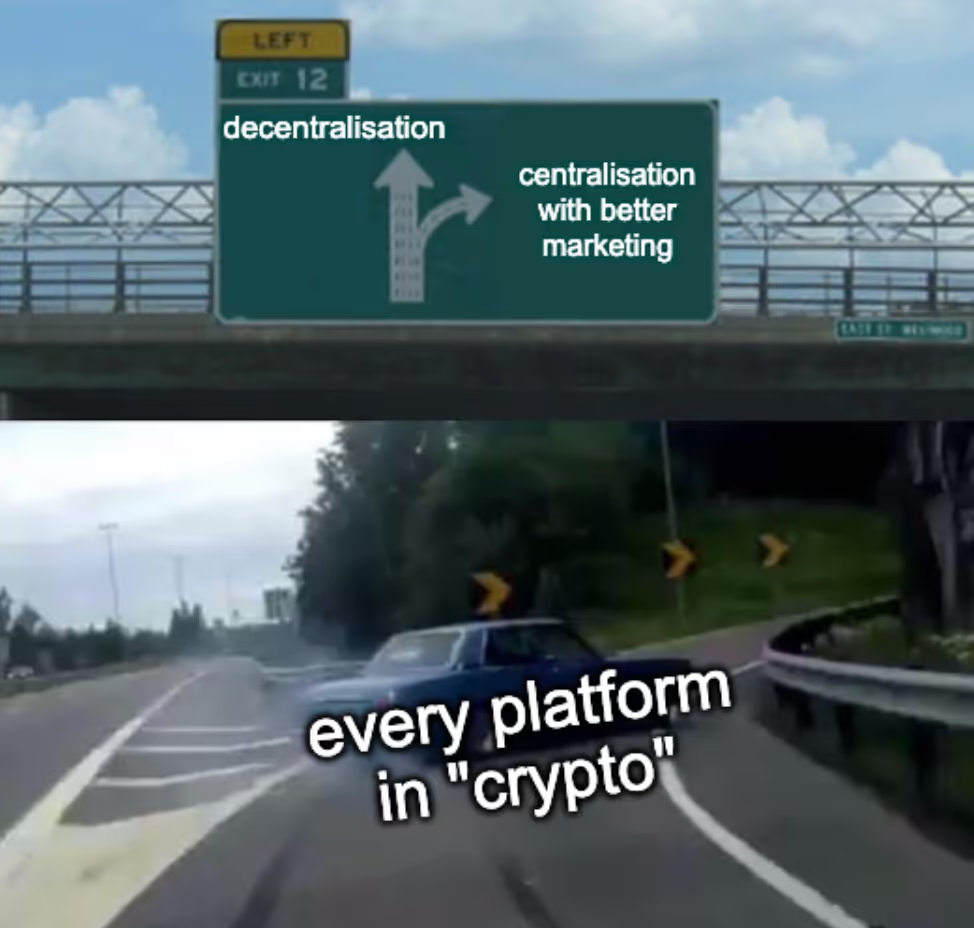
Drift, like many similar platforms, is not fully autonomous. It operates with a defined group of individuals who retain administrative authority over the system. They can approve changes, adjust how assets are treated, and intervene when necessary. This layer is typically described as a safeguard, allowing the protocol to “evolve and respond to risks”. But a backdoor is still a backdoor.
In the weeks leading up to the incident, an attacker gained access to that layer of control. Valid approvals were obtained through the system’s own governance process, allowing transactions to be authorized in advance and executed later.
When those transactions were finally triggered, control shifted from the administrators to the attacker.

With that authority, the attacker introduced a malicious asset, assigned it artificial value, and used it as collateral to withdraw real funds from the system. From the protocol’s perspective, nothing was out of place. The actions were permitted, the rules were followed, and the transactions were executed as instructed.
So what actually happened? This was not a failure of the system, but a consequence of how it was designed.
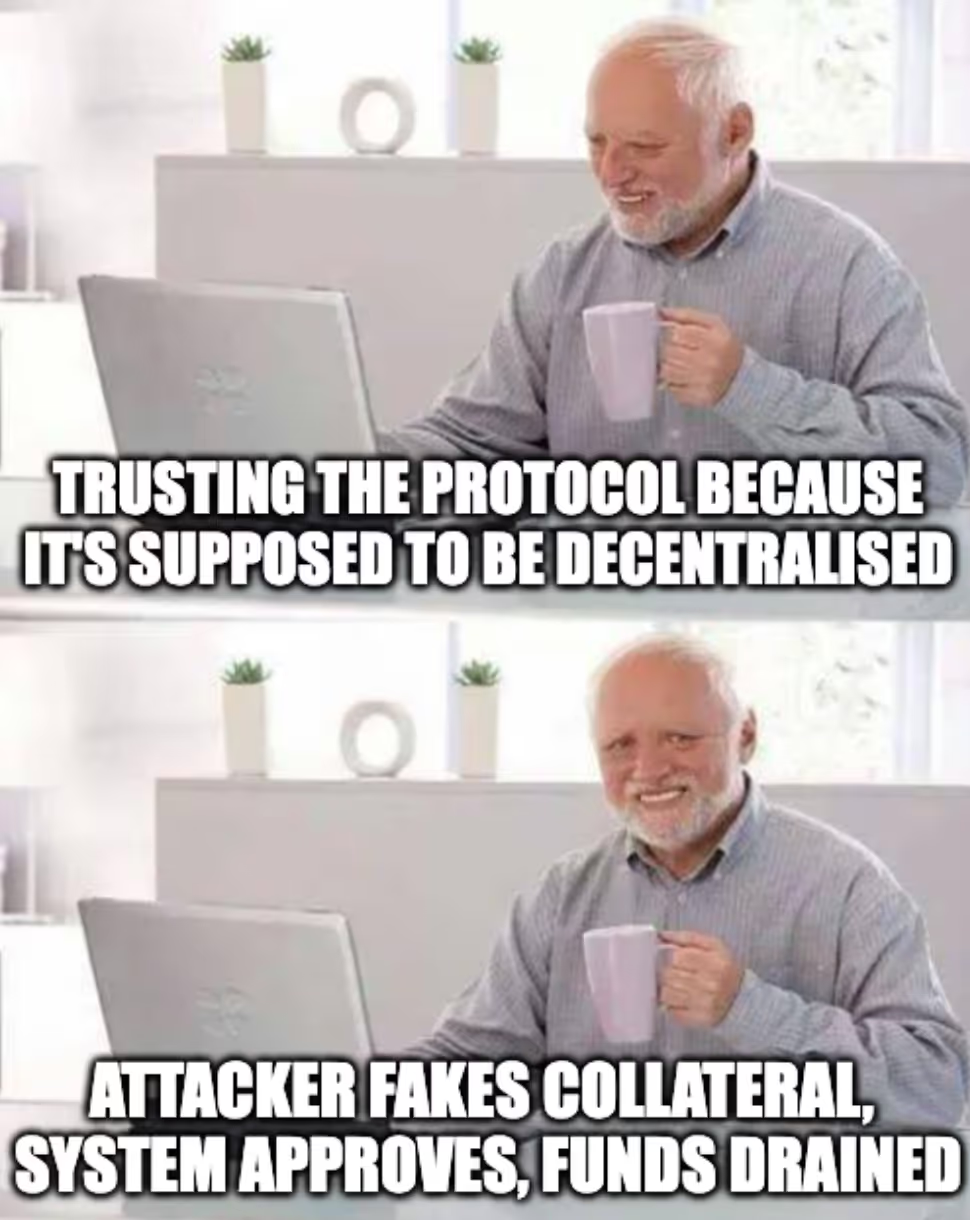
A useful way to think about it is to imagine a storage facility that claims to operate automatically. You place your belongings inside, you see them listed in your account, and you assume the system simply holds what is already there. Under normal conditions, everything appears consistent, and there is no reason to question how those records are maintained.
However, behind the scenes, a small group retains the ability to access the facility and update those records. If that access is ever exercised, someone can open a unit, place something of no real value inside, a box full of XRP t-shirts, for example, and record it as if it were worth the same as the items already stored.
From that point on, the system treats it as legitimate, allowing real belongings to be withdrawn against it. Nothing has been forced or bypassed; the system is simply following its own records, even though the ledger no longer reflects reality.
The Illusion of Ownership
It’s easy to look at something like Drift and shrug it off as just one bad apple. One sloppy platform, one unlucky incident, case closed, right? Think again.
The same tired pattern of centralized control dressed up as decentralization runs through the entire crypto industry. Most people open an app, see a nice clean balance on the screen, and naturally assume “this is mine, I control it”. The interface is slick, the numbers look safe, and the whole experience is engineered to feel exactly like the bank app you’ve already used. In reality it's just a promise on a screen, subject to someone else’s rules, someone else’s whims, and someone else’s solvency.

Whether funds are held on an exchange, deployed on a yield platform, or sitting inside a protocol, they are still subject to the rules of the environment they are in. Those rules can change, access can be restricted, and outcomes can be altered in ways that are not visible until they occur.
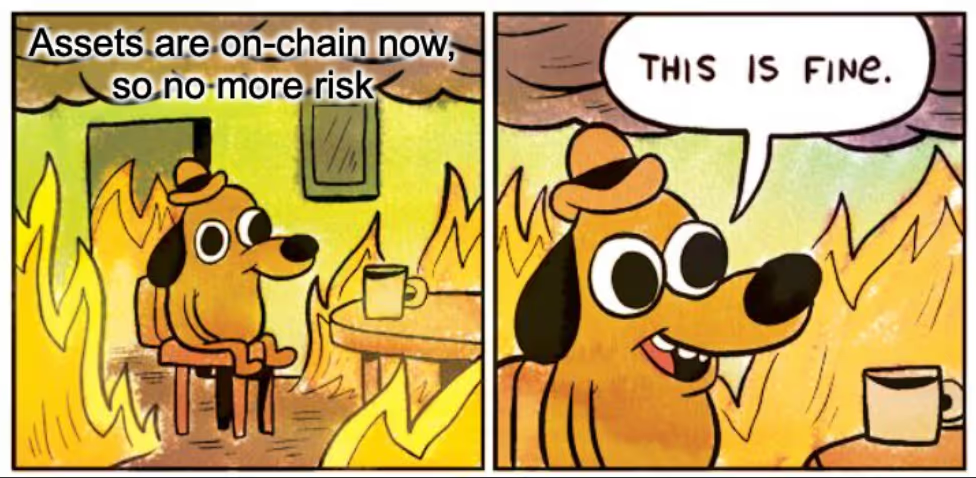
The banks have been pulling this stunt for a while: create money out of thin air, lend it to you with interest attached, lie about inflation, slap a friendly logo on the app, and call it “your money”. The crypto clowns just copied the homework and added some buzzwords about decentralisation to make you feel in control. A shocking number of people believe all that risk magically evaporates the moment the assets go “on-chain”.
Here’s an example that makes the illusion impossible to ignore…
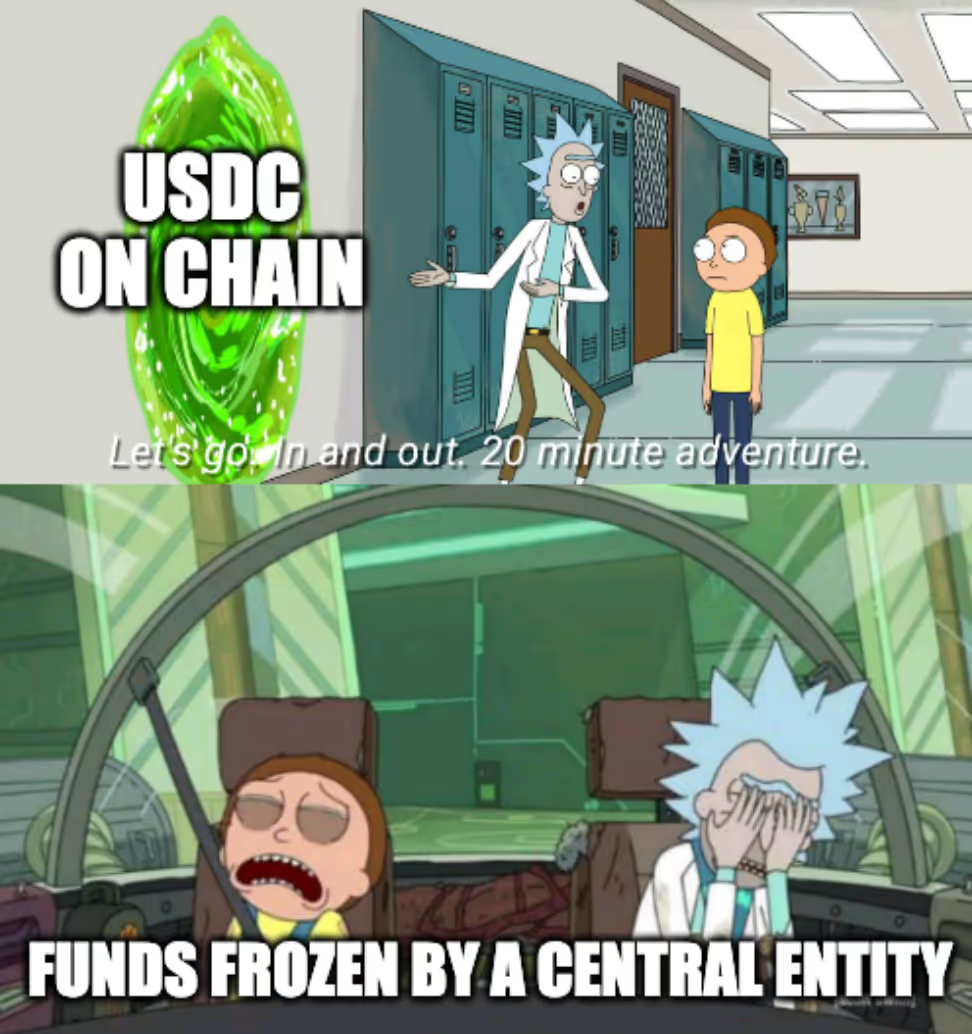
You hold USDC in a self-custodied wallet. The assets are on-chain, the private keys are under your control, and from the outside, this appears to satisfy the conditions most people associate with ownership. Except, USDC is issued and controlled by a central entity, which retains the ability to freeze specific addresses. And they’ve already done it multiple times in practice.
In that situation, nothing about the user’s setup has changed. The keys remain in their possession, the assets remain visible on-chain, and yet access to those funds has effectively been removed. The system hasn’t been bypassed. It has operated according to its design.
This is where the mental gymnastics finally collapse.
If the asset you hold can be frozen, restricted, or influenced by someone else, then what you have is not absolute control, but conditional access.
What Happens When It Breaks
If this still feels abstract, it isn’t.
The same structure has already been tested repeatedly, across different platforms and under different conditions.
FTX wasn’t some garage project; it was one of the largest crypto exchanges, used by millions who genuinely believed their assets were safe. In November 2022, it collapsed after it was revealed that customer funds had been used to support a related trading firm, Alameda Research. Panic withdrawals hit and liquidity vanished. As users rushed to withdraw their assets, the exchange was unable to meet demand and halted withdrawals. Billions left inaccessible while the whole thing imploded.

Celsius, a crypto lending platform performed the same stunt, allowing users to deposit assets in exchange for yield. In June 2022, it paused withdrawals citing “extreme market conditions”, after taking on large, illiquid, and leveraged positions that could not be unwound quickly enough to meet customer requests.
Users were locked out of their funds for over a year, and while partial recoveries began in 2024, losses were still significant. When distributions finally began in 2024, the real kick in the teeth arrived: claims were based on the value of assets at the exact moment of bankruptcy, not the assets themselves.
In practical terms, if you had deposited 1 Bitcoin in 2022 when it was worth around $20,000, your claim got frozen at that dollar figure. By the time anything came back, Bitcoin had more than tripled, but you didn’t get your Bitcoin back. You got a fraction of that original dollar value, often somewhere between 50–70%. Brilliant “yield” platform, right?

And there are yet more examples…
The Terra network was a project built around a so-called “stablecoin” called UST, which was designed to maintain a constant value of $1. It became widely used because users could deposit UST into platforms within the ecosystem and earn yields of around 20% annually. That return was often described as stable, and in some cases even framed as “risk-free” by promoters.
Unlike traditional stablecoins backed by reserves, UST relied on a mechanism involving its sister token, LUNA, to maintain its peg. The system allowed users to swap 1 UST for $1 worth of LUNA, and vice versa. This created an arbitrage incentive: if UST traded below $1, traders could buy it at a discount, redeem it for $1 of LUNA, and profit from the difference.
In May 2022, sustained selling pressure pushed UST below $1. As traders began redeeming UST for LUNA at scale, increasing amounts of LUNA were created. This expanded the supply of LUNA rapidly, which drove its price down. As the price of LUNA fell, more LUNA needed to be issued to absorb the remaining UST, accelerating the imbalance. This created a feedback loop where both assets weakened at the same time. Within days, UST lost its peg entirely, LUNA fell from around $80 to effectively zero, and tens of billions in value were wiped out.
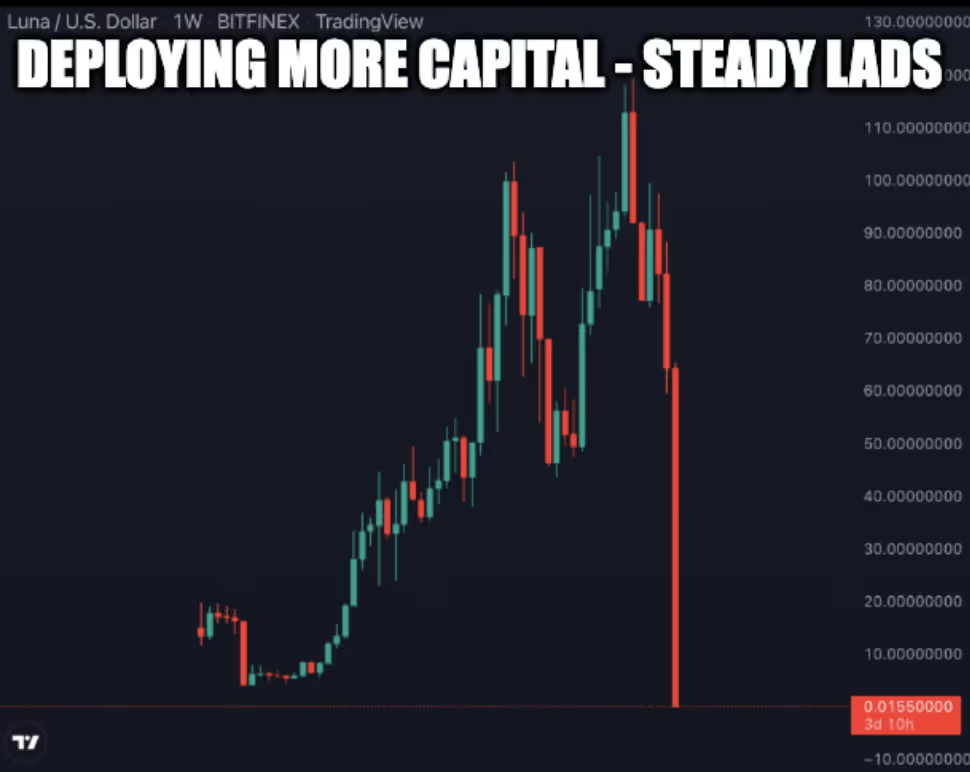
Each of these systems was widely used and broadly trusted at the time. The specific details of each calamity may differ, but the pattern is always the same.
In each case, the problem was never user error. It was that users were never in control of their own funds. Instead they had put their trust into the hands of unscrupulous people running centralized platforms or networks.
You Never Left the System
What makes this difficult to recognize is not the technology, but the framing.
Most people approach crypto with the assumption that it represents a break from the existing financial system. The terminology suggests it, the interfaces reinforce it, and the narrative is built around it. The expectation is that, by moving into these systems, they’ve stepped outside the constraints of traditional finance. Spoiler alert, they haven’t.
Because most of what gets called “crypto” isn’t neutral money at all. It’s a startup wearing a blockchain costume. There’s a founding team, VC money in the background, and a small group of people quietly deciding upgrades, features, pauses, and “emergency” fixes. The marketing calls it “governance.” The reality is just a company with a backend ledger pretending to be revolutionary money.

The core structure is still the same old game with a fresh coat of paint. There are still entities that issue assets, define the rules under which those assets operate, and retain the ability to enforce those rules when required. The mechanisms are different, and the language is updated, but the dependency on a controlling layer is still present.
This only becomes obvious when the pressure hits. In traditional finance, access can be restricted through account freezes, payment blocks, or institutional controls that sit behind the interface. These actions are not anomalies; they are part of how the system is designed to function. What is less obvious is how closely this model is replicated elsewhere.
In crypto systems, similar capabilities exist, even if they are presented differently. Assets can be issued with built-in controls, protocols can be modified through governance, and outcomes can be influenced by those with the authority to act. The surface-level experience may suggest autonomy, but the underlying structure often depends on the same kinds of decisions and interventions.

The difference, in practice, is not as large as it appears. What changes is the presentation. What often remains is the reliance on someone, somewhere, having the ability to step in when conditions require it.
No One to Trust
All financial systems relocate trust. Banks place it in institutions, while crypto projects place it in founders or companies that define how the system operates.
Bitcoin is fundamentally different because it doesn’t relocate trust at all. Instead, it’s designed so that the system can function without relying on any single party to act correctly or in good faith.
In recent days, reports have emerged of ships transiting the Strait of Hormuz being required to settle tolls under conditions where traditional financial infrastructure cannot be relied upon. The process is straightforward: vessels submit cargo details, a fee is calculated based on volume, and payment must be made within a very short time window in order for passage to be granted.

If a payment can be delayed, blocked, or reversed by an intermediary, it isn’t suitable for that environment. If it depends on an issuing entity, or on infrastructure that can be restricted under sanctions, it introduces a point of failure.
Systems that rely on issuers or governing bodies carry with them the ability to enforce restrictions. Stablecoins, for example, are issued by identifiable organisations that retain the ability to freeze or blacklist specific addresses. Other crypto assets depend on networks or governance structures that can be influenced or altered under pressure.
Bitcoin operates differently.

It isn’t issued by a company or managed by a central organization. The network is maintained by independent participants who validate transactions according to a shared set of rules. Those rules are enforced by the software each participant chooses to run, rather than by a coordinating authority.
As a result, there is no single party with the ability to prevent a valid transaction from being included in the network, or to freeze a specific unit of bitcoin based on the identity of its holder.

That doesn’t make it immune to all constraints. Transactions can still be observed, fees can rise under congestion, and access to exchanges can be restricted. But the core function, the ability to transfer value without requiring approval from an issuer or intermediary, remains intact.
Where This Leaves You
Leaving assets on an exchange is a decision to hand over control. The interface may feel simple and familiar, but the arrangement is custodial. When the platform fails, access goes with it.
Moving into self-custody is the next step, but it only solves part of the problem. If the asset itself depends on an issuer, a foundation, or a governing group, then the same dependency remains. The keys may be yours, but the system you are holding still operates on someone else’s terms.
This is where the distinction between Bitcoin and the rest becomes unavoidable. The rules are enforced by the network itself, and holding it in self-custody removes both the intermediary and the control layer behind the asset.

From there, the question becomes practical. Self-custody requires doing things properly. Devices, backups, and day-to-day practices matter, and mistakes are not reversible. For those who want to go further, jurisdiction also becomes relevant. If access to financial systems can be restricted, having an alternative environment to operate in is part of the same problem.
This is where most people need support. We help clients move away from systems that depend on issuers and intermediaries, toward setups where control is actually held, not assumed. That includes secure Bitcoin self-custody, reducing avoidable risks, and, where relevant, establishing a viable second option for where and how they operate.
If you want to approach this properly, you can book a 30-minute consultation with one of our advisors to walk through your current setup and next steps.
Bitcoin removes the need to trust the system. Your setup determines everything else.