
Bitcoin ATMs in Australia: Are They (Still) Worth Using?
.avif)
In this article:
Bitcoin ATMs offer one of the fastest and most convenient ways to buy bitcoin in Australia. All you need to do is locate a Bitcoin ATM in your area, insert cash for the amount of BTC you want to buy, and you’ll receive BTC to your mobile wallet.
However, that convenience comes with trade-offs, which can include high transaction fees, caps on how much bitcoin you can buy or sell, and the need to complete ID verification before you can transact.
Read on to learn everything you need to know about Bitcoin ATMs in Australia, including their legal status, how to use one to buy bitcoin, and whether you should be using them at all.
TL;DR
- Bitcoin ATMs are legal to use in Australia, but the regulatory environment has tightened significantly in 2025 and into 2026, with AUSTRAC increasing enforcement and imposing new requirements on operators.
- For a first-time buyer looking to buy under a few hundred dollars in Bitcoin, an ATM is a workable on-ramp. For anything larger, other options are almost always better.
- Anyone using a Bitcoin ATM should have a self-custody wallet set up before they walk to the machine, verify the wallet address, and be aware of scam patterns that instruct victims to send Bitcoin at an ATM.
Are Bitcoin ATMs Legal in Australia?
Yes, Bitcoin ATMs are legal in Australia. However, they operate under strict regulatory scrutiny.
For starters, Bitcoin ATM operators, who fall under the Digital Currency Exchange (DCE) framework, must register with AUSTRAC and comply with the Anti-Money Laundering and Counter-Terrorism Financing Act. Recent AUSTRAC enforcement has targeted Bitcoin ATM operators who have failed to meet the required registration and reporting obligations, as well as ATMs linked to scam-related transactions.
The AUSTRAC enforcement push has significantly changed what using a Bitcoin ATM actually looks like in practice. The minimum requirements that operators need to meet include:
- Lower cash transaction limits at many machines: cash deposits and withdrawals at crypto ATMs are capped at A$ 5,000, making it harder to buy and sell large sums of bitcoin at ATMs.
- Enhanced customer checks: operators must apply stronger customer due diligence controls. Users should expect identity checks, although the exact documents and process may vary by operator and transaction risk.
- Increased on-machine warnings about scams: warnings are intended to prompt users to pause before sending funds.
Users can check AUSTRAC’s public register to confirm the registered operators before using any Bitcoin ATM. It’s a quick check and the clearest way to find registered Bitcoin ATM operators who operate within the rules.
The regulations covering Bitcoin ATMs have been part of Australia's push to tighten its Bitcoin rules, which have made it more challenging to preserve your financial privacy as a bitcoin holder in Australia.

When Does Using a Bitcoin ATM Actually Make Sense?
Bitcoin ATMs provide a convenient way for users to buy and sell BTC, but they aren’t necessarily the best choice. Let’s take a look at a few scenarios where a Bitcoin ATM might make sense, and where it probably doesn’t:
Good fit
- A first-time buyer looking to buy a small amount of bitcoin
- Cash-in-hand purchases up to a few hundred dollars
Bad fit
- Anyone buying bitcoin as a regular investment or savings plan, as the ATM fees will quickly eat into your returns
- Any larger purchase, because the comparatively high fees stop making sense
- Anyone who could just as easily use an exchange and withdraw BTC to self-custody or transact on a peer-to-peer basis
How to Use a Bitcoin ATM Safely (If You're Going to Use One)
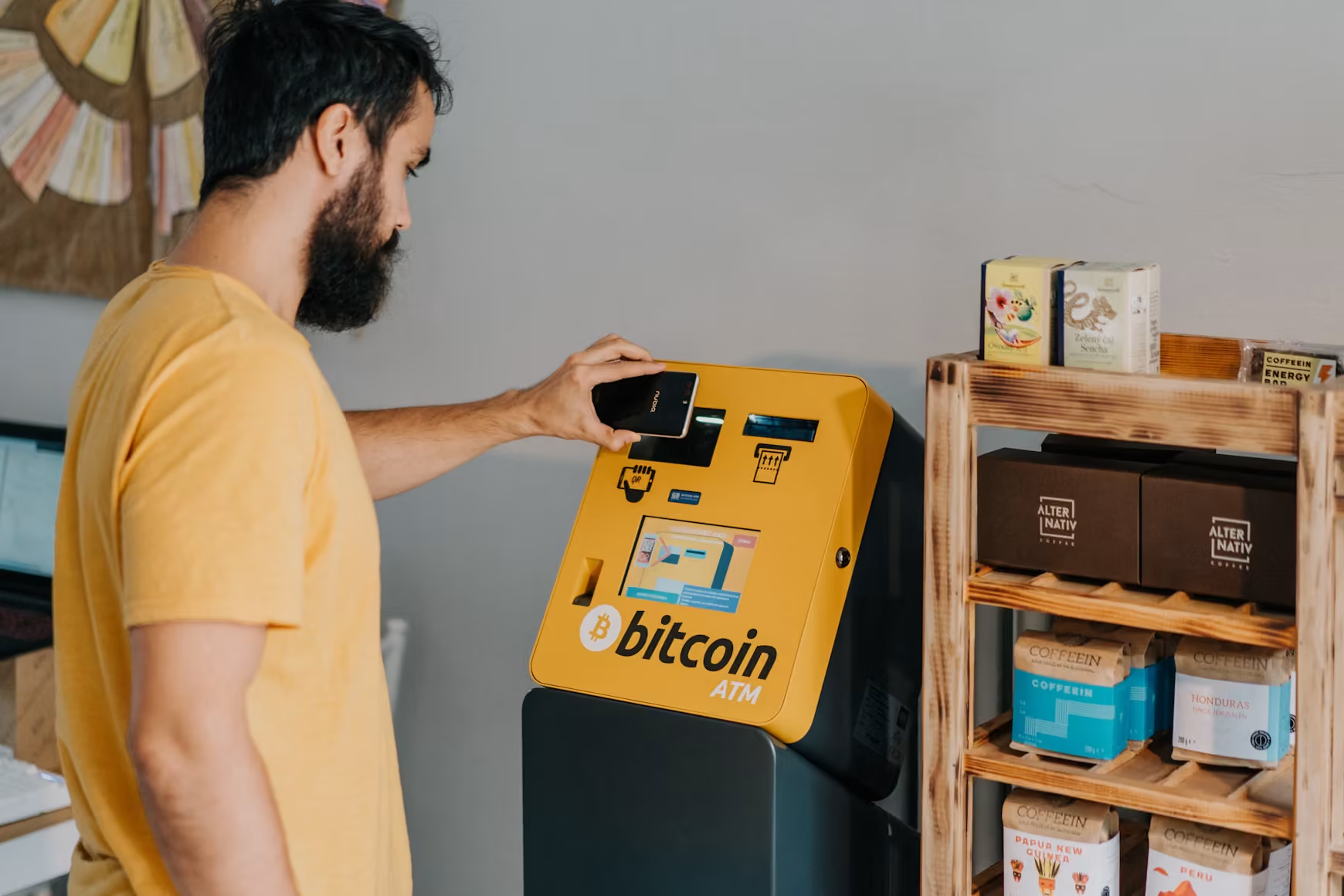
Now, let’s look at how to actually use a Bitcoin ATM in Australia for those who’d like to use them to purchase BTC:
- Set up a self-custody wallet at home before you leave if you don’t already have one.
- Verify the ATM operator is registered on the AUSTRAC public register.
- If required, verify your identity. Depending on the machine and the transaction amount, you may need to scan a form of ID or take a picture of it to comply with regulations.
- Check the machine's on-screen fee and exchange rate against a live market price before inserting cash. If the spread is in the double-digits, you may want to rethink purchasing bitcoin at that Bitcoin ATM
- Double-check that the receiving wallet address on the ATM screen matches the address in your wallet before confirming the transaction.
- Keep the transaction receipt. It contains the transaction ID and helps if anything goes wrong or needs to be verified later.
And that’s it!
Purchasing BTC at a Bitcoin ATM is actually surprisingly easy, provided you’re comfortable with managing a mobile wallet and scanning QR codes.
What Are Better Alternatives for Buying Bitcoin in Australia Than Bitcoin ATMs?
While Bitcoin ATMs are generally safe for buying and selling small amounts of bitcoin (if you aren’t very fee-sensitive), they aren’t the best option for buying bitcoin. So, let’s look at some alternatives that might work better for Australian investors.
Exchange purchase followed by withdrawal to self-custody
Most Australian buyers are probably better served by opening an account with a compliant Australian exchange, buying bitcoin with competitive fees, and immediately withdrawing to a wallet they control. Fees are generally lower, the amount limit is higher compared to Bitcoin ATMs, and the identity data is already in the exchange's system, whether the buyer uses a KYC exchange or a Bitcoin ATM operator.
Peer-to-peer platforms
For buyers who want to buy bitcoin without an exchange account, peer-to-peer (P2P) platforms usually offer a better balance of fees and access than a Bitcoin ATM.
Trades happen directly between the buyer and seller, often with more flexibility on payment method and amount than an ATM allows.
In-person cash trades
For those with an established connection in their local Bitcoin community, an in-person cash trade at market rate removes the ATM fee entirely and avoids putting your ID data on a third-party server.
In-person cash trade is a route best suited for BTC buyers who know how to receive funds into a wallet they control. If you aren’t there yet, our Australian Self-Custody Guide is a good place to start.
Where The Bitcoin Way Fits
Once you've bought bitcoin, whether through an ATM, an exchange, or a P2P trade, the harder question is safely storing the BTC. That's where we at The Bitcoin Way come in.
We work with Australian bitcoin holders on the custody side, offering personalized consulting services for Bitcoiners needing help with hardware wallet setup through our Bitcoin Self-Custody Training, multisig for larger holdings, SMSF Bitcoin custody, and inheritance planning.
Start your path to financial sovereignty by booking a free 30-minute consultation with our experts.

Disclaimer: This article is educational only. It is not tax or financial advice. Australian buyers should consult a registered tax agent and a licensed financial advisor for advice specific to their circumstances. Regulatory and compliance information reflects publicly available guidance at the time of publication and may change.
FAQs
Are Bitcoin ATMs legal in Australia?
Yes, Bitcoin ATMs are legal in Australia. Bitcoin ATM operators must be registered with AUSTRAC under Australia's Anti-Money Laundering and Counter-Terrorism Financing Act. The public AUSTRAC register lists registered digital currency exchange providers. Recent enforcement has tightened requirements on operators, but the machines themselves remain legal for Australians to use.
How much does a Bitcoin ATM charge in Australia?
Fees can range from 5% to 15% above the market rate, and sometimes higher. That's significantly higher than most exchange purchases, where fees typically range from 0.5% to 3.5%. Anyone buying more than a few hundred dollars of Bitcoin will pay considerably more at an ATM than at an exchange.
Are Bitcoin ATMs safe?
The machines themselves are generally safe from a hardware and software perspective. The risks come from scam patterns targeting Bitcoin ATM users, from high fees, and from identity data being retained by ATM operators once verification thresholds are hit. The machines are safer to use when the buyer already has a self-custody wallet set up and is aware of common scam scripts.
Are Bitcoin ATMs anonymous?
No, not really. Most Australian Bitcoin ATMs require identity verification at low thresholds due to AUSTRAC obligations. Even at machines that allow small amounts without ID, the on-chain transaction is permanently recorded, and CCTV at the ATM location typically ties the transaction to a person.